Introduction to the AI agent developer roadmap template
Why this template?
Agentic AI job postings grew roughly 280% year-over-year, with average total compensation near $190K and senior roles at frontier labs clearing $300K-$500K. But most roadmaps for this role miss the mark — they either assume a machine learning research career and start with linear algebra, or they tell you to "call some APIs" with no concrete path. I built this template for a different reason:
- A lot of developers ask how to move from "I can call an LLM API" to "I ship agents that handle real work" — this template is the concrete path between those two points.
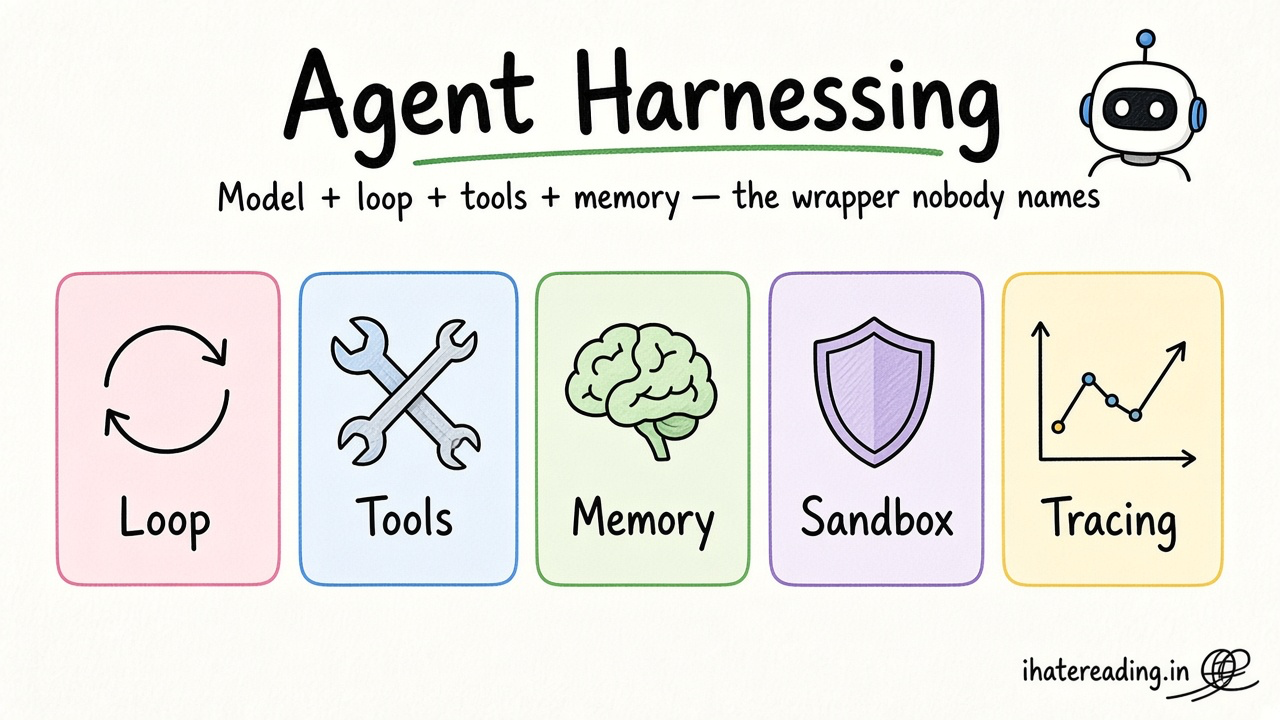
- Courses and YouTube tutorials cover individual frameworks well, but nowhere brings memory, tool use, sandboxing, observability, and compliance together as one roadmap — in production, you need all five, not just the framework.
- A tracking system helps you see exactly which layer of the stack you're missing before you try to ship something real.
How to use the template?
This template is ordered so each chapter builds on the previous one — foundations, then how an agent thinks (frameworks, tools), then what it remembers (memory, vector DBs), then where it safely runs (sandboxing), then how you know it's actually working (observability, compliance). Follow the left-sidebar order the first time through; come back to individual chapters once you're building something real and need depth on one layer specifically.
External references worth bookmarking
- Model Context Protocol — tool/data standard for agents
- Agent2Agent (A2A) — agent-to-agent interoperability
- OpenAI Agents SDK · LangGraph
- iHateReading: AI agent overview · Smallest AI agent tutorial
What Is It?
The bibliography/intro page explains why this roadmap template exists and how to use it without drowning in ML math.
It points to external standards (MCP, A2A) and flagship SDK docs worth keeping open.
It frames agent engineering as software delivery, not research-only work.
Why Should I Care?
Clear intent stops you from comparing this path to a PhD curriculum and quitting on day one.
Bookmarked specs become your interoperability cheat sheet when wiring tools.
Real World Analogy
This intro page is the syllabus cover sheet — it explains why the course exists before you crack open the textbook chapters.
Visual Mental Model
template goals
       |
  chapter 1..N (sidebar)
       |
  bookmark external specs (MCP, A2A)
Beginner Explanation
Read why the template was built, how to follow chapters, and bookmark MCP/A2A specs. Treat progress tracking like a kanban board for skills.
Smallest Possible Example
# Track progress like code
DONE = ["python", "mcp"]
NEXT = "memory"
Common Mistakes
❌ Skipping straight to frameworks chapter from Google search.
You miss foundations and version-control guidance that keep prompts and evals shippable.
❌ Collecting links without building.
Bookmarks help only after you run one agent loop end to end.
❌ Assuming one YouTube tutorial replaces the full stack.
Videos cover slices; this template shows how slices connect in prod.
Real Project Example
Engineering ladders at Anthropic and OpenAI partners expect git, evals, and tool safety — not notebook-only workflows.
Consultancies ship agent roadmaps similar to this for enterprise rollouts.
Build This Mini Project
Create a CHECKLIST.md in a personal repo mirroring sidebar chapters; check one off per week with a tiny artifact (script, diagram, or eval).
Interview Question
How do you track learning a new agent stack?
Ship small vertical slices per layer — hello tool call, hello RAG, hello trace — and version prompts/evals in git like application code.
Key Takeaways
- Read the template intent before random chapters.
- Bookmark MCP and A2A early.
- Track skills with artifacts, not hours watched.
- Agent work is software engineering.
YouTube learning
Core concepts from video walkthroughs: