All-in-one document to learn AI agent development, stay updated, build real agents and more
A step-by-step guide to becoming an AI agent developer — the frameworks, protocols, memory systems, and infrastructure that separate a real production agent from a demo.
Roadmap (Things to Learn)
- Biblography
- Programming Languages & Foundations
- LLM Providers & APIs
- Agent Frameworks & SDKs
- Tool Use, Function Calling & MCP
- Browser Automation & Computer Use
- Memory & Context Engineering
- Vector Databases & RAG
- Sandboxing & Execution Environments
- Observability, Evals & Compliance
- Deployment & Cost Management
- Version Control
Projects & Preparation
Why it matters
Most agent tutorials stop at "call the model in a loop". The jobs, and the production incidents, are everywhere else: tool auth, memory, running code safely, cost. I ordered the chapters so each one fixes a problem the previous one creates.
Where people get stuck
- Jumping to LangGraph before you can write async Python and call a REST API. You can't debug a tool loop if imports, async and HTTP still feel like magic.
- Leaving memory and sandboxing for later. The first time your agent runs user-supplied code without isolation is the day security stops trusting you.
- Skipping traces because the demo looks fine. Multi-step failures only show up in traces.
Try this
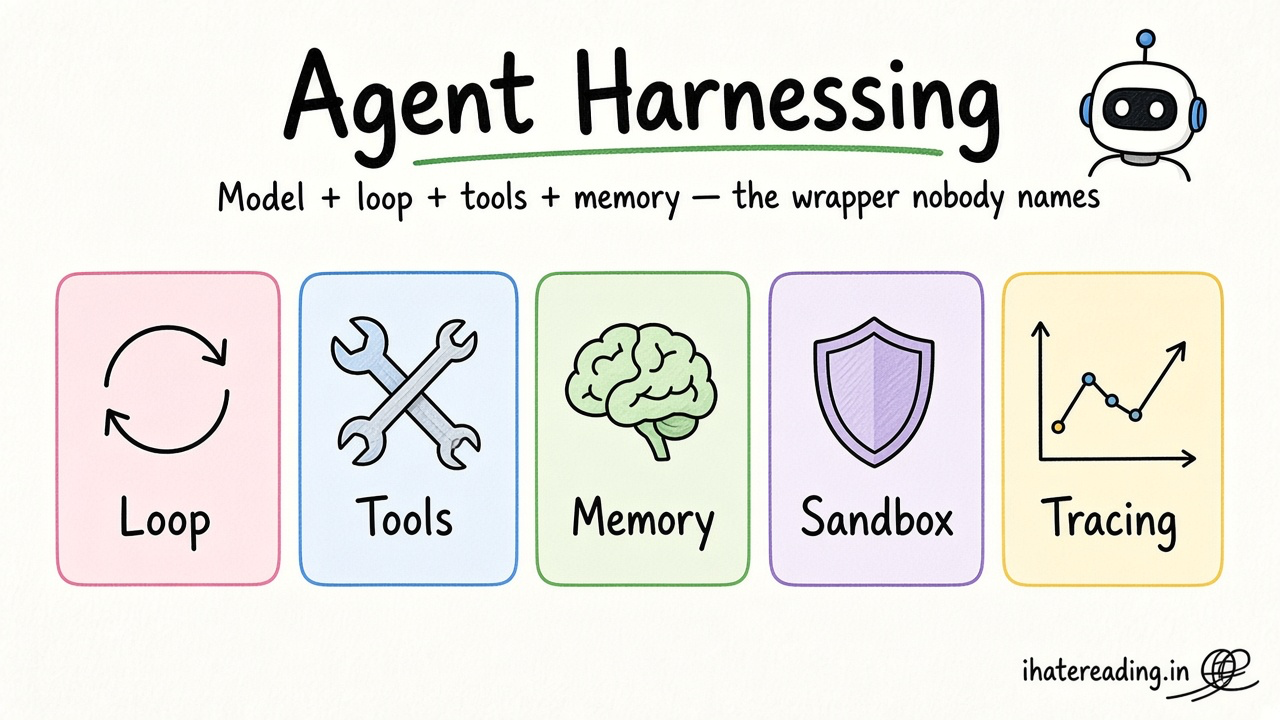
Draw your current project on paper: model, tools, memory, where code runs, where logs go. Every empty box is the chapter to read next.
Interview question
What does a production agent need beyond the LLM?
Tool interfaces (usually MCP or plain APIs), memory or retrieval, isolated code execution, tracing and evals, deployment with cost controls, and some governance. The model is one part of the system.
YouTube learning
Core concepts from video walkthroughs: